
The Hepatocyte-Directed Vesicle (HDV™) Platform
Our HDV platform enables peptides, proteins, and hormones to access the portal-hepatic region, expanding their activity from peripheral circulation to include targeted physiologic action in the portal-hepatic region. By localizing drug activity where key metabolic processes occur, HDV is designed to enhance efficacy, safety, and durability. The platform is a potentially powerful new approach to metabolic disease treatment.

How HDV unlocks new treatments in metabolic therapy
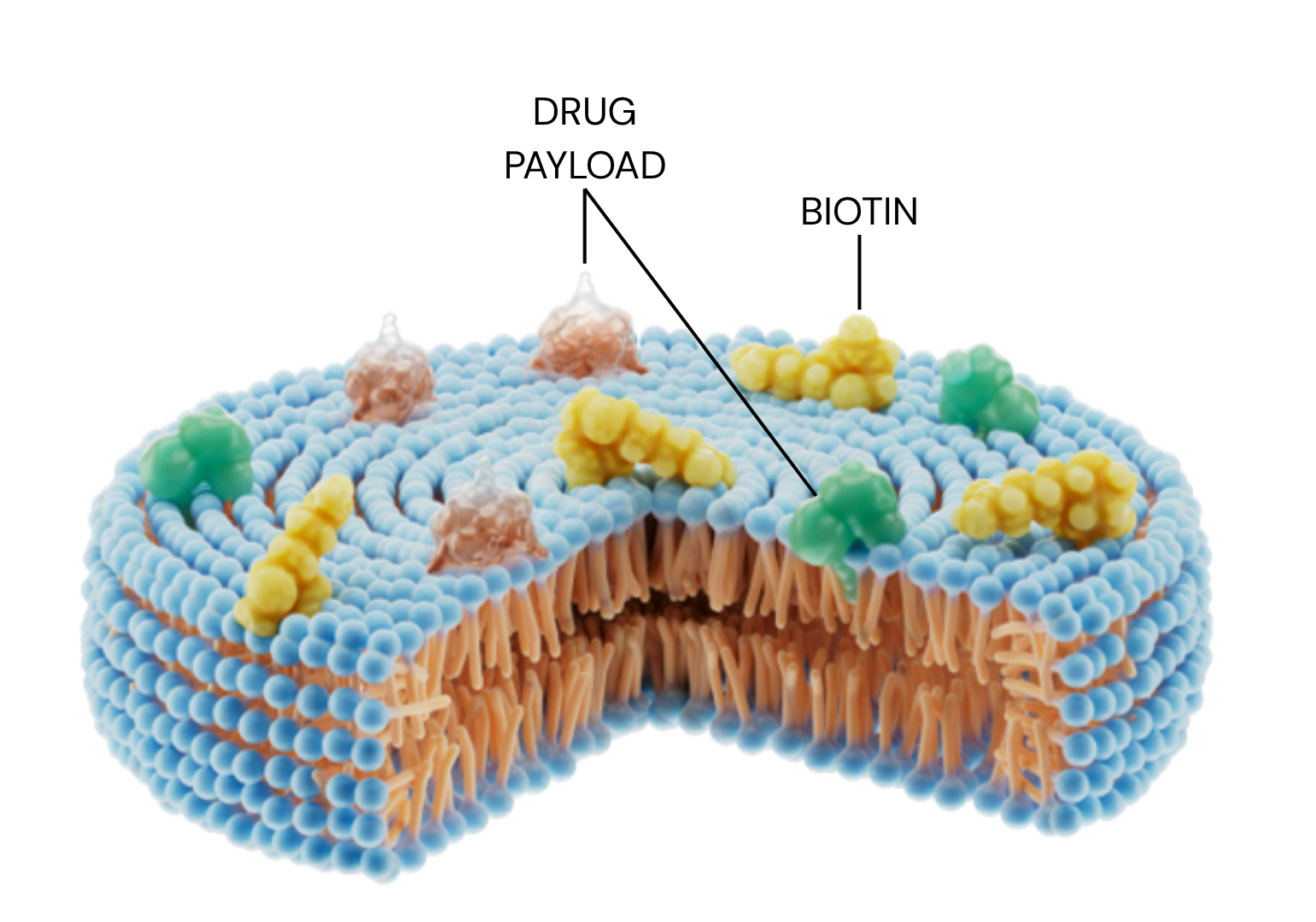
Bicelle Disc Structure
HDV is a lipid nanoparticle designed to mimic natural cell membranes, enhancing cellular uptake and bioavailability. Its net negative surface charge enables electrostatic binding with positively charged proteins and peptides.
This structure enhances stability and utilizes a simple and scalable preparation in both injectable and oral formulations, allowing versatile drug development.

Biotin-PE
Biotin is a naturally occurring coenzyme critical for fatty acid synthesis, glucose metabolism, and gene regulation. In HDV, Biotin-PE is embedded in the surface membrane, enabling efficient targeting to hepatocytes, where the sodium-dependent multivitamin transporter (SMVT) is most highly expressed, facilitating selective hepatic uptake.
Engineered for Next-Generation Clinical Impact
HDV binds up to 100 proteins and peptides onto each disc, concentrating and directing biologics and drug therapies through the portal-hepatic highway. This precise localization enables therapies to access the central receptors mediating glucose and lipid metabolism.
Stronger on-target efficacy
Today’s therapies rely on peripheral pharmacology, which results in avoidable side effects. HDV localizes active pharmaceutical ingredients, delivering therapeutic benefit.
Portfolio-wide differentiation
The same HDV architecture adapts to multiple active pharmaceutical ingredients, turning familiar molecules into first-in-class, liver-directed therapies.
De-risked development
Novel pharmacology based on mimicking normal physiology and a pristine toxicity profile in our HDV studies to date create a potentially favorable regulatory profile.
Advancing Targeted Therapies to Treat Metabolic Diseases
Pioneering three programs to develop first-in-class therapies for diabetes, obesity, and metabolic disorders.
Insulin
Restoring the liver’s natural role in glucose regulation to reduce hypoglycemia risk and provide a clinically differentiated insulin therapy.
Incretins (GLP-1)
Localizing GLP-1 activity in the portal vein to access the gut-liver-brain-axis, providing patients a healthier, more durable therapy for weight loss as well as glucose and fat control.
Serotonin
Targeting hepatic serotonin to address the central defect of hepatic and peripheral insulin resistance, addressing type 2 diabetes and hyperinsulinemia at their root.
Targeting the portal-hepatic region—where metabolic regulation begins—offers a new path for restoring glucose and lipid balance in diabetes, obesity, and other cardiometabolic diseases.
OPTI-2 Phase 2b Evidence: Equivalent Glycemic
Control with Less Hypoglycemia
A1C non-inferiority maintained
Glycemic control achieved without compromise.
Statistically significant reductions in hypoglycemia
Improvements across multiple CGM-derived endpoints.
Dramatic reduction in severe hypoglycemic events with HDV-insulin
Zero events with HDV-Insulin compared to events with standard insulin.
New insight into hypoglycemia burden
Largest blinded CGM dataset in T1D reveals the true impact of Level 2 hypoglycemia.
Restoring physiologic insulin delivery to the liver may reduce hypoglycemia without compromising glycemic control, addressing a longstanding limitation.
Curious about our programs?
Our pipeline is dedicated to advancing HDV technology into new frontiers of metabolic medicine.
.avif)